










How should a wafer lot be handled after an interrupted wire-saw cut?
Hold the affected lot, preserve the machine event log and map the interruption to the wafer surfaces. Release only after geometry and surface checks show that the affected region meets the same requirements as an uninterrupted cut.
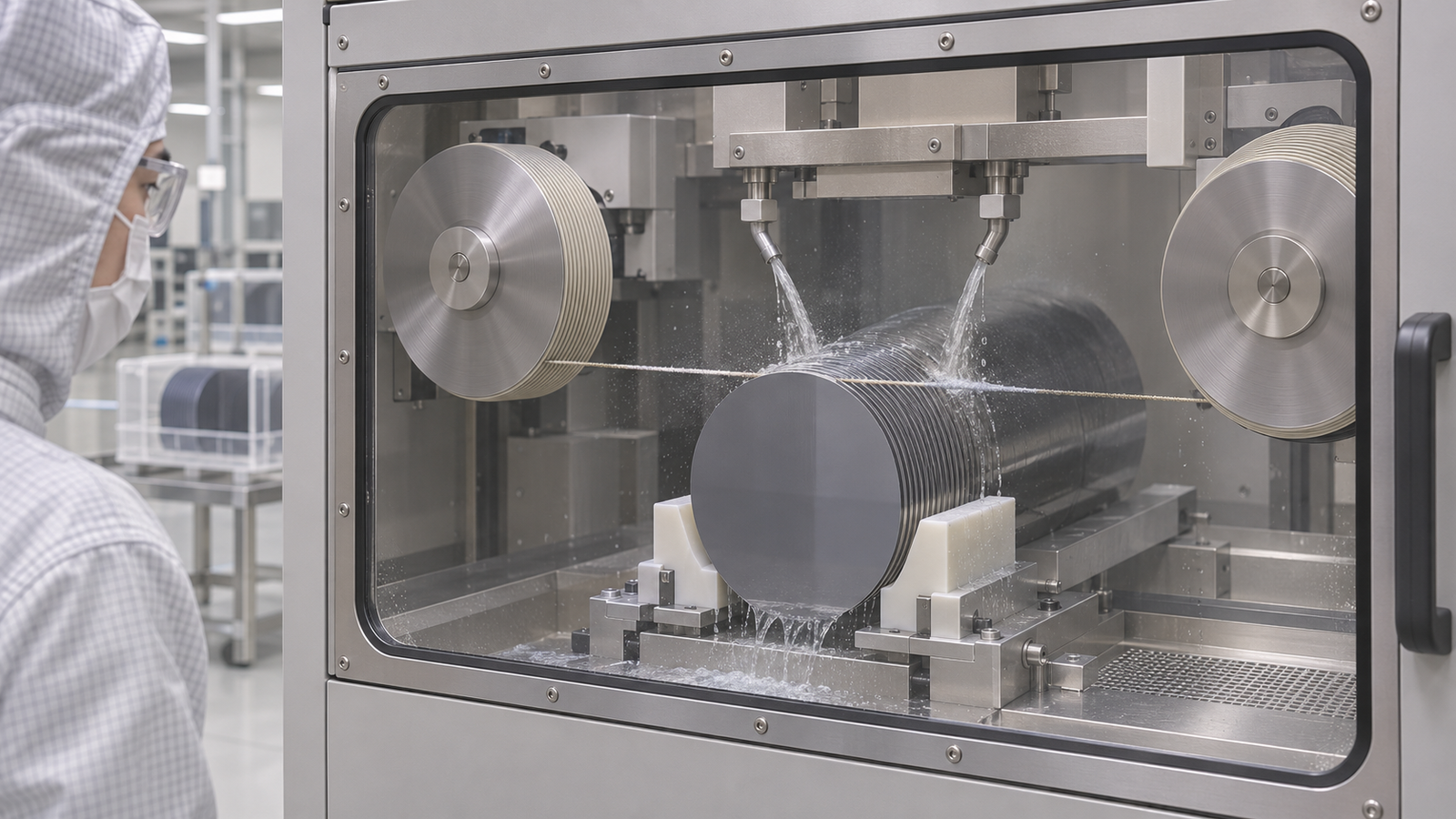
Map the event before cleaning
Record the stop reason, actual feed position, time, wire motion and whether coolant continued. An emergency stop and a controlled feed hold are not equivalent. Save the last stable signal interval and the return to normal operation. Preserve wafer lane and cutting direction before unloading.
Identify the affected band
Use the machine position as a starting point, not the exact mark location. Wire deflection and recovery mean the cutting interface can lag the feed axis. Compare a profile crossing the suspected band with adjacent areas and an uninterrupted reference wafer. Sample both edge and center lanes on a multi-wire saw.
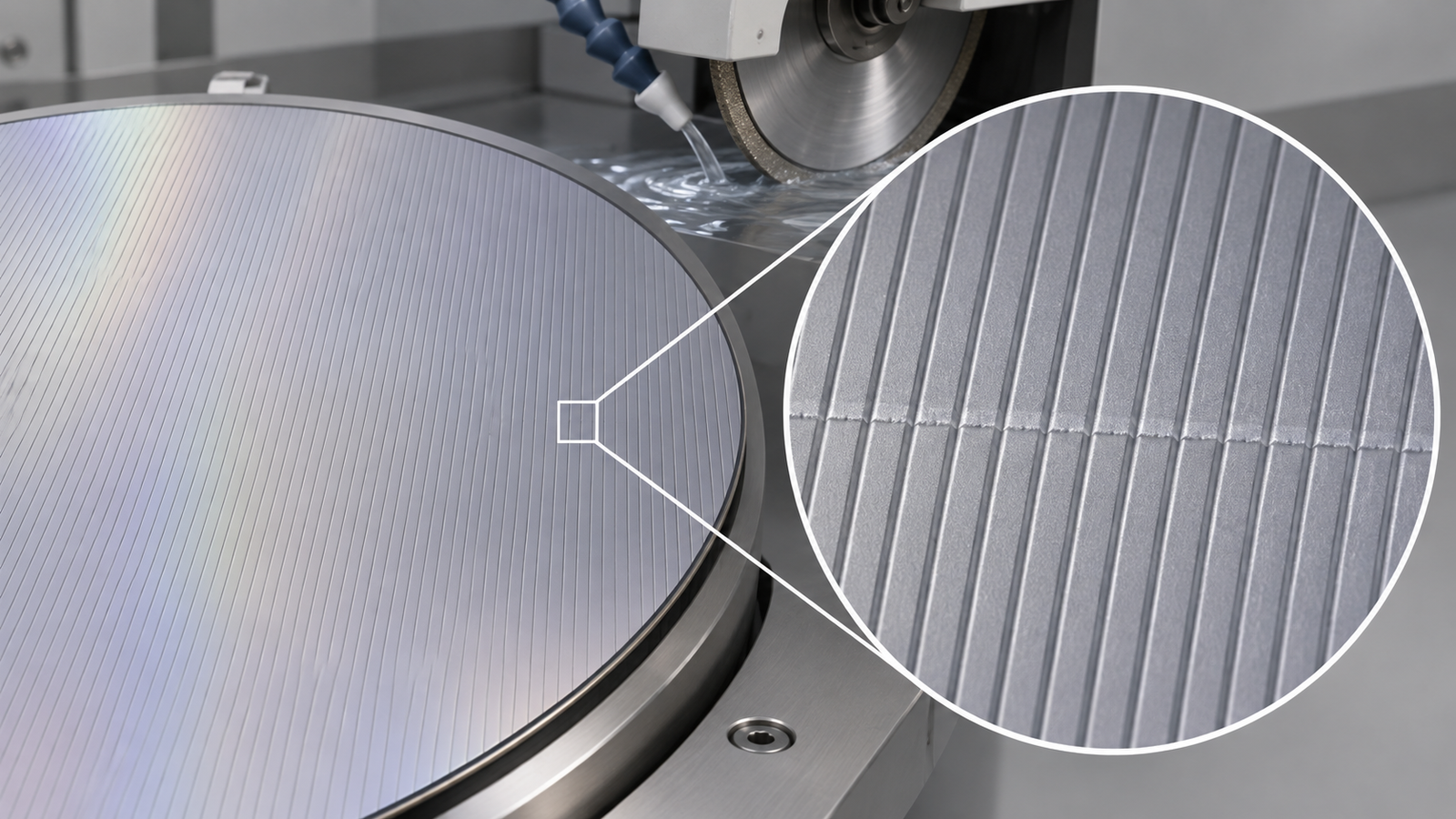
Choose the disposition
A visible line is not automatically a reject, and a visually clean surface is not automatically acceptable. Compare thickness, waviness, cracks and downstream stock removal against the drawing. Where the damage is uncharacterized, retain samples for cross-section or controlled removal rather than assuming polish will erase the mark.
Qualify planned stops separately
On representative trial material, test the supplier-approved hold and recovery sequence at different engagement depths. Keep unplanned stoppages and broken-wire events outside that qualification. Ask the supplier to demonstrate alarm logging and data export as part of the acceptance run.

Related engineering guides
See the diamond multi wire saw ttv drift diagnosis and diamond wire saw factory acceptance test fat guide for complementary checks. Compare machine configurations in the ewirexon product directory.
Frequently asked questions
Can a stopped wire saw always resume?
No. Recovery depends on the alarm, machine design and workpiece condition. Follow the manufacturer-approved procedure.
Does a restart mark prove a crack is present?
No. Inspect the local topography and use a validated damage check where the application requires it.
Which wafers should be sampled?
Include edge and center lanes plus any region indicated by the event log.
Can finishing remove a restart mark?
Only when verified removal fits within the thickness allowance and clears the affected layer.
What should procurement request?
A controlled interruption trial, traceable wafer maps and a clear account of which interruptions are excluded.
Technical reference
Experimental study on wire bow and saw marks. The inspection steps above are engineering recommendations, not supplier performance claims.