








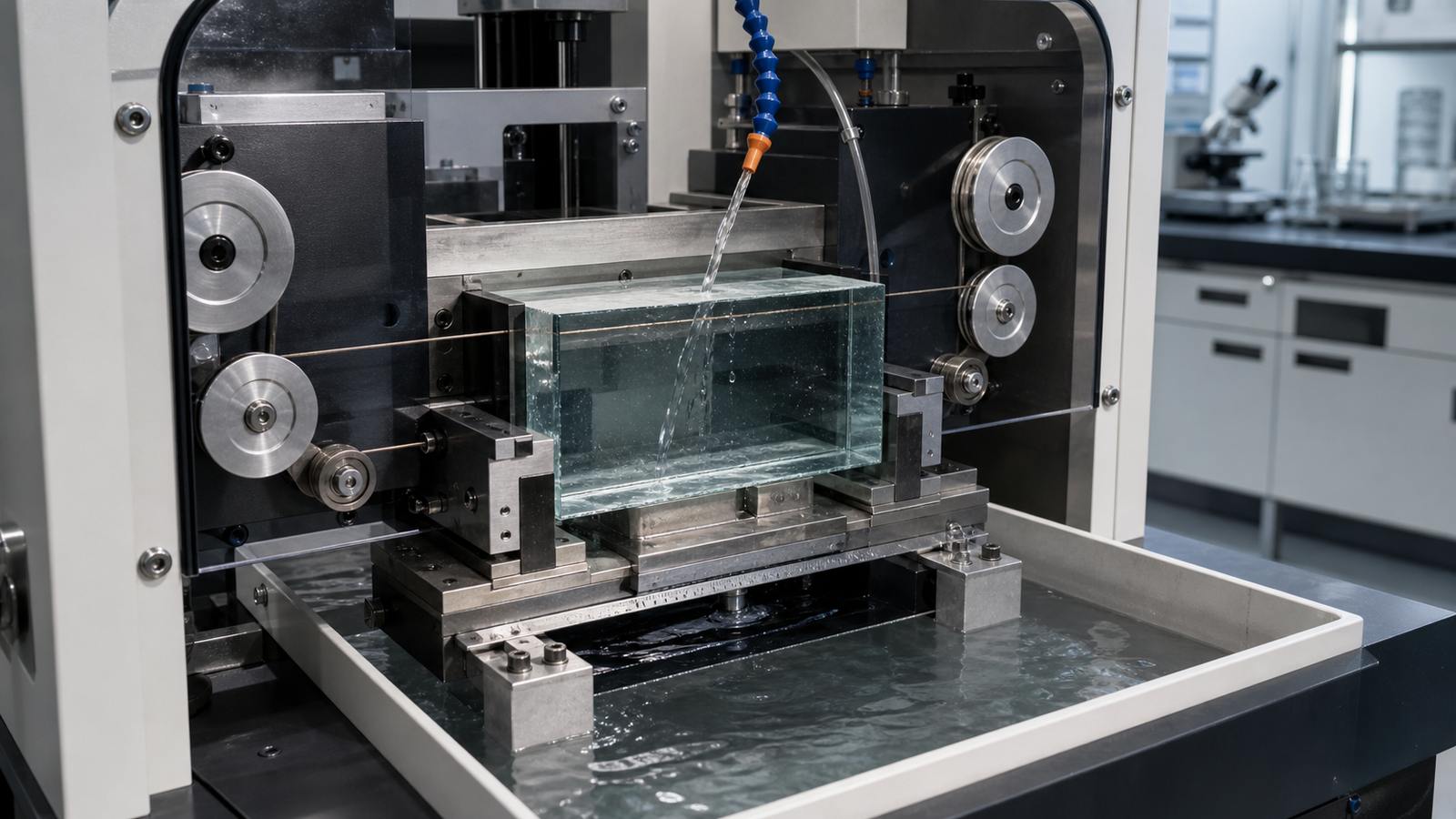
Diamond Wire Saw for Glass Core Substrate R&D: Where It Fits and Where It Does Not
Learn where diamond wire sawing fits in glass core substrate R&D, how to control edge damage, and when laser or blade singulation is the better choice.

Custom Cutting Systems for Graphite & Carbon Material Processing
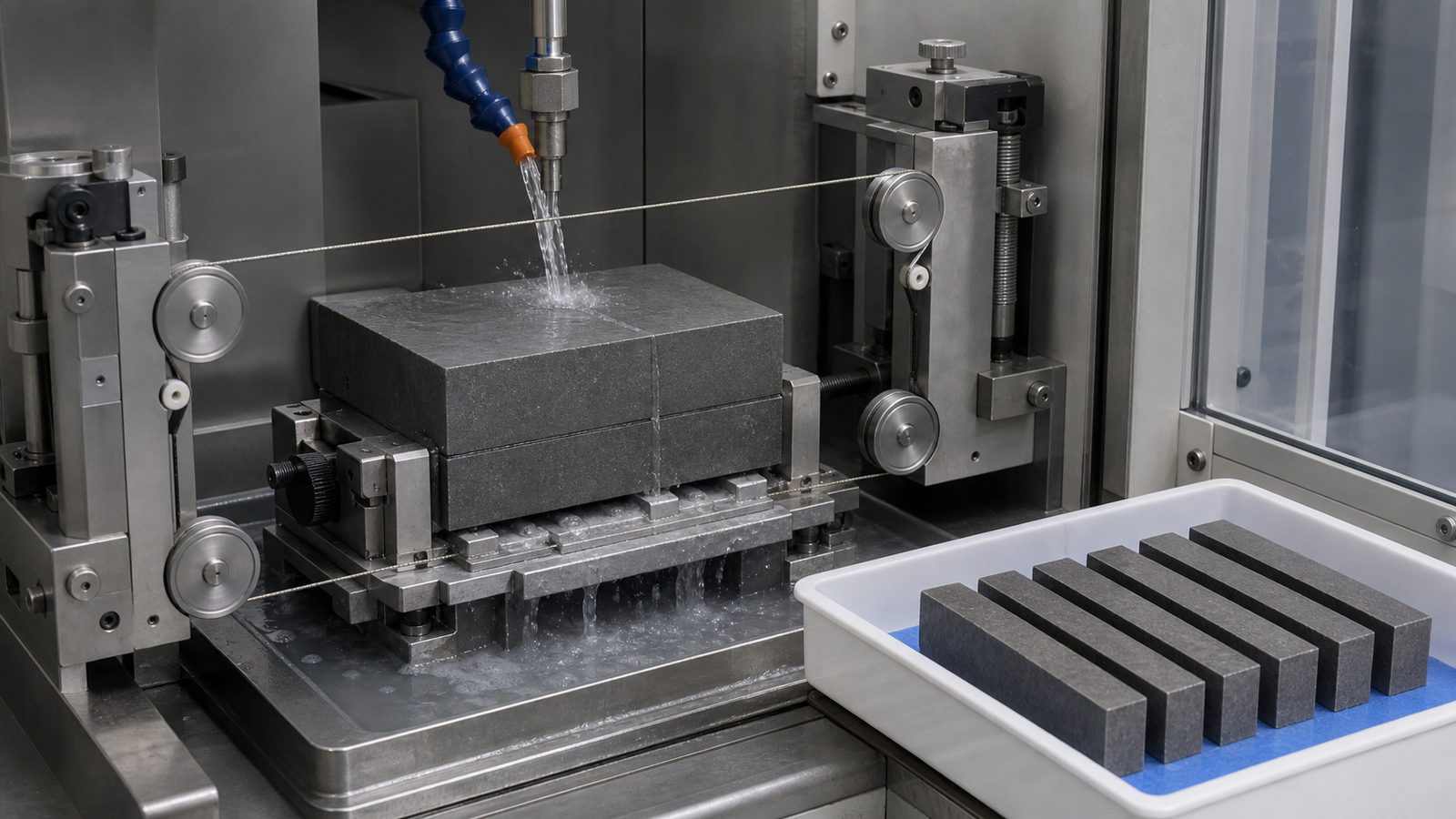
Graphite and carbon materials are essential for semiconductor, EDM, and new energy industries, valued for high temperature resistance and conductivity. Precision custom cutting shapes these materials into complex components, directly impacting accuracy and efficiency. Diamond wire cutting has become the optimal solution, delivering lower kerf loss, cleaner cuts, and greater flexibility than traditional methods.
In production lines, diamond wire systems perform multi-axis programmable cutting, completing one-time forming of complex profiles with smooth edges and minimal dust. Stable tension control and optimized cooling prevent chipping and deformation, critical for high-purity carbon components.
Our systems maximize material yield with ultra-low kerf loss, ensure clean, low-dust operation, and maintain stable performance in continuous production, supporting large-format workpieces and custom shapes.
Our diamond wire cutting systems provide high-precision, custom profile cutting for graphite electrodes, carbon composites, carbon fiber reinforced materials, and high-purity carbon components. Designed for clean, low-dust processing, the machines ensure minimal material loss and tight dimensional control, even for complex shapes and large-format workpieces. With stable wire tension and intelligent path planning, we deliver consistent cutting quality for semiconductor, EDM, metallurgy, and new energy applications.
| NO. | Parameter | Specification |
| 1 | Model | TCQF15030CNC |
| 2 | Cutting Principle | Endless diamond wire / Physical cutting |
| 3 | Cutting Functions | Slicing / 2D Contour Cutting |
| 4 | Maximum Workpiece Size(mm) | 1200 × 1000 × 1000 mm(L×W×H) |
| 5 | Worktable Size(mm) | 1500×300 |
| 6 | Cutting Planarity Accuracy(mm) | 0.1 |
| 7 | Surface Roughness(μm) | Ra 0.8 μm |
| 8 | Wire Specification(mm) | Ø0.65–1.0/6250 |
| 9 | Tension System | Constant Wire Tension Control |
| 10 | Guide Wheel Quantity | 4 wheels |
| 11 | Drive Motor | Servo motor |
| 12 | Wire Speed (m/s) | 51Max(Adjustable) |
| 13 | Total Power(kW) | 3.6 |
| 14 | Voltage | 220v 50Hz |
| 15 | Control System | Custom-developed Tongcheng T33 system |
| 16 | Footprint (L×W×H)(mm) | 3200×1500×1500 |
| 17 | Gross Weight kg | 3200 |

Learn where diamond wire sawing fits in glass core substrate R&D, how to control edge damage, and when laser or blade singulation is the better choice.

Learn how to control waviness, chipping, wire wear and material loss in NdFeB magnet cutting with a diamond wire saw and a measurable trial plan.
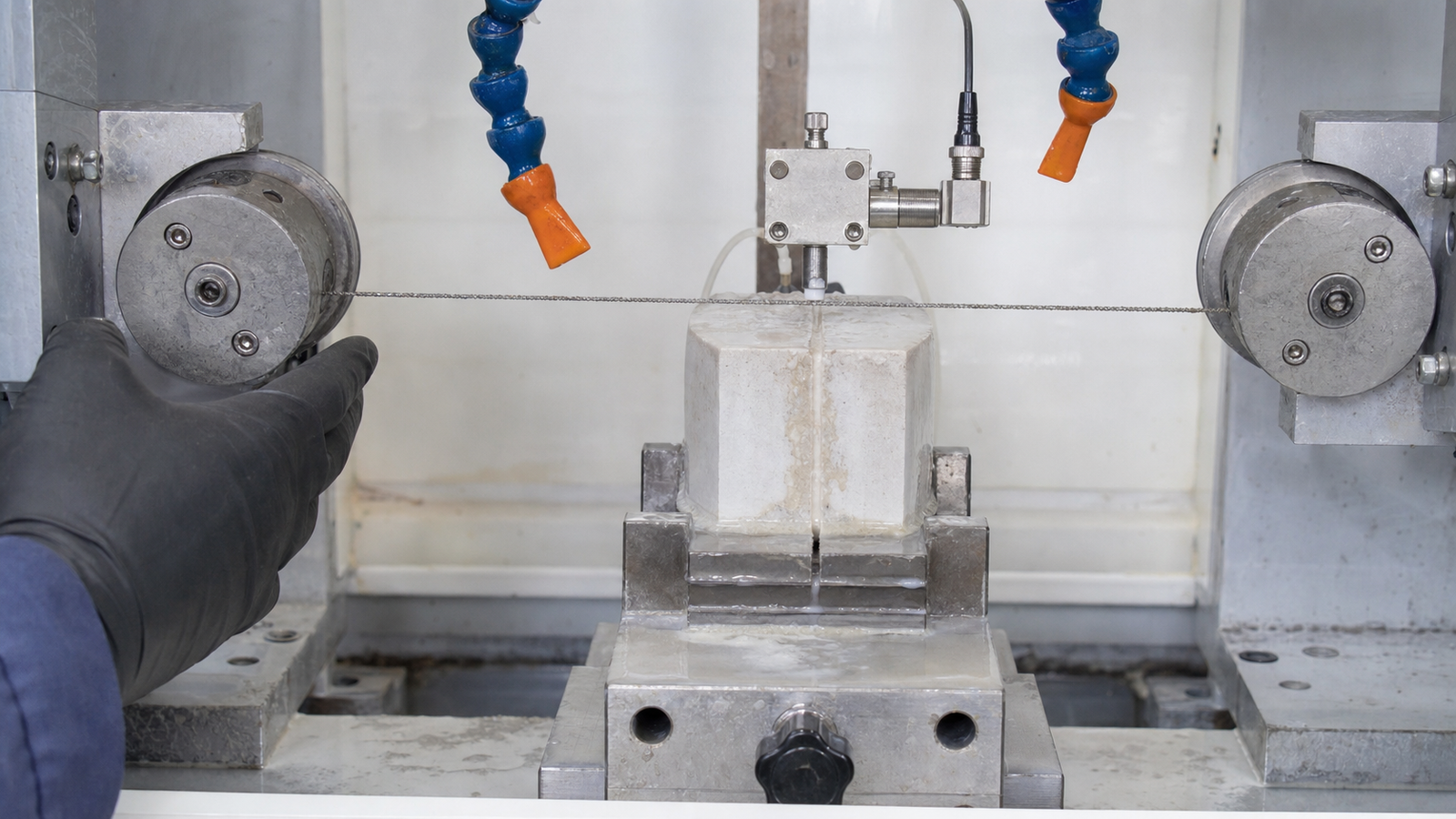
Diagnose diamond wire saw breakage using wire-path, tension, load, coolant, wear, and fixture evidence instead of trial-and-error parameter changes.
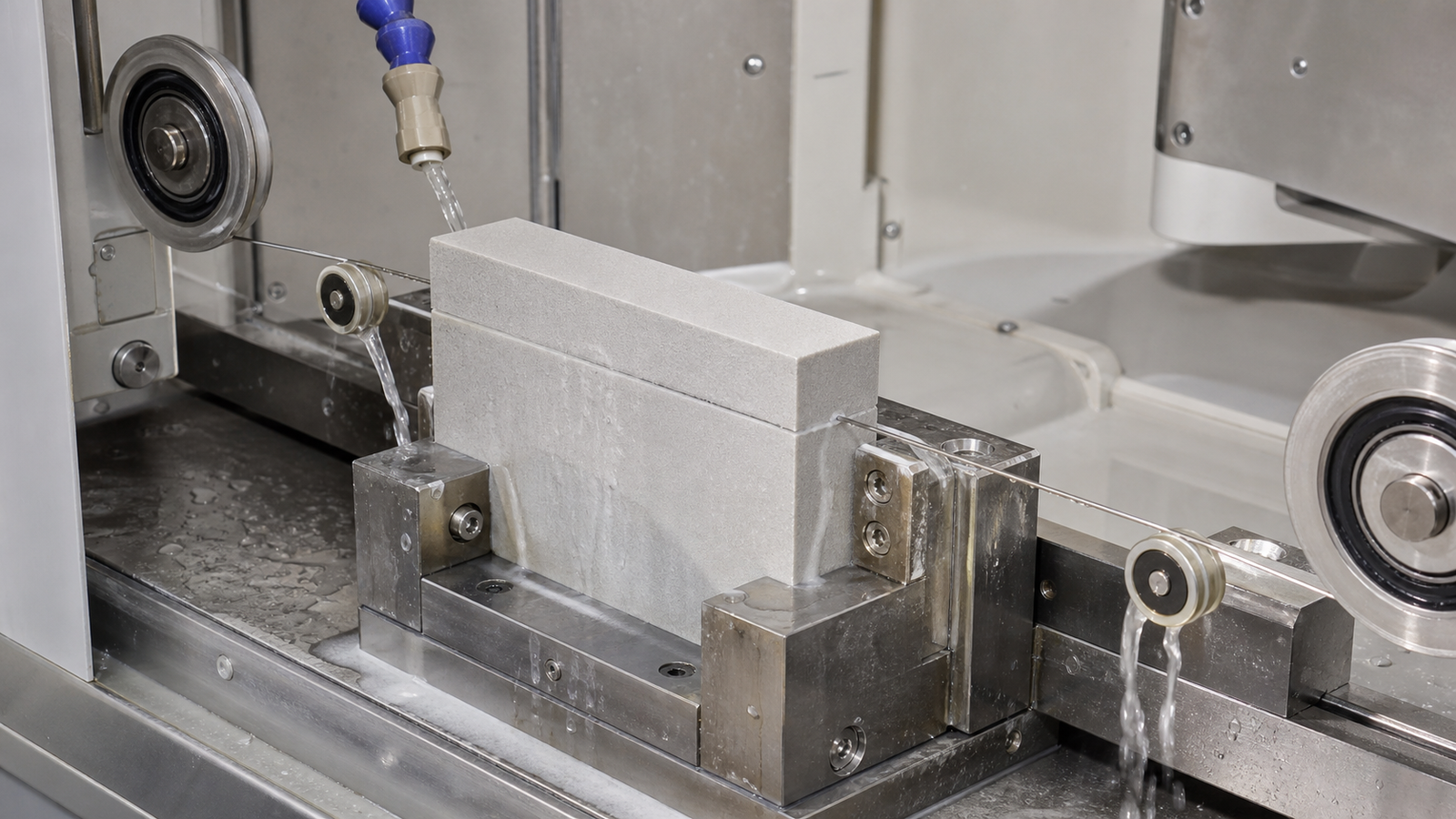
Learn how to qualify a diamond wire saw process for AlN substrate cutting, control chipping and subsurface damage, and select lab or production equipment.
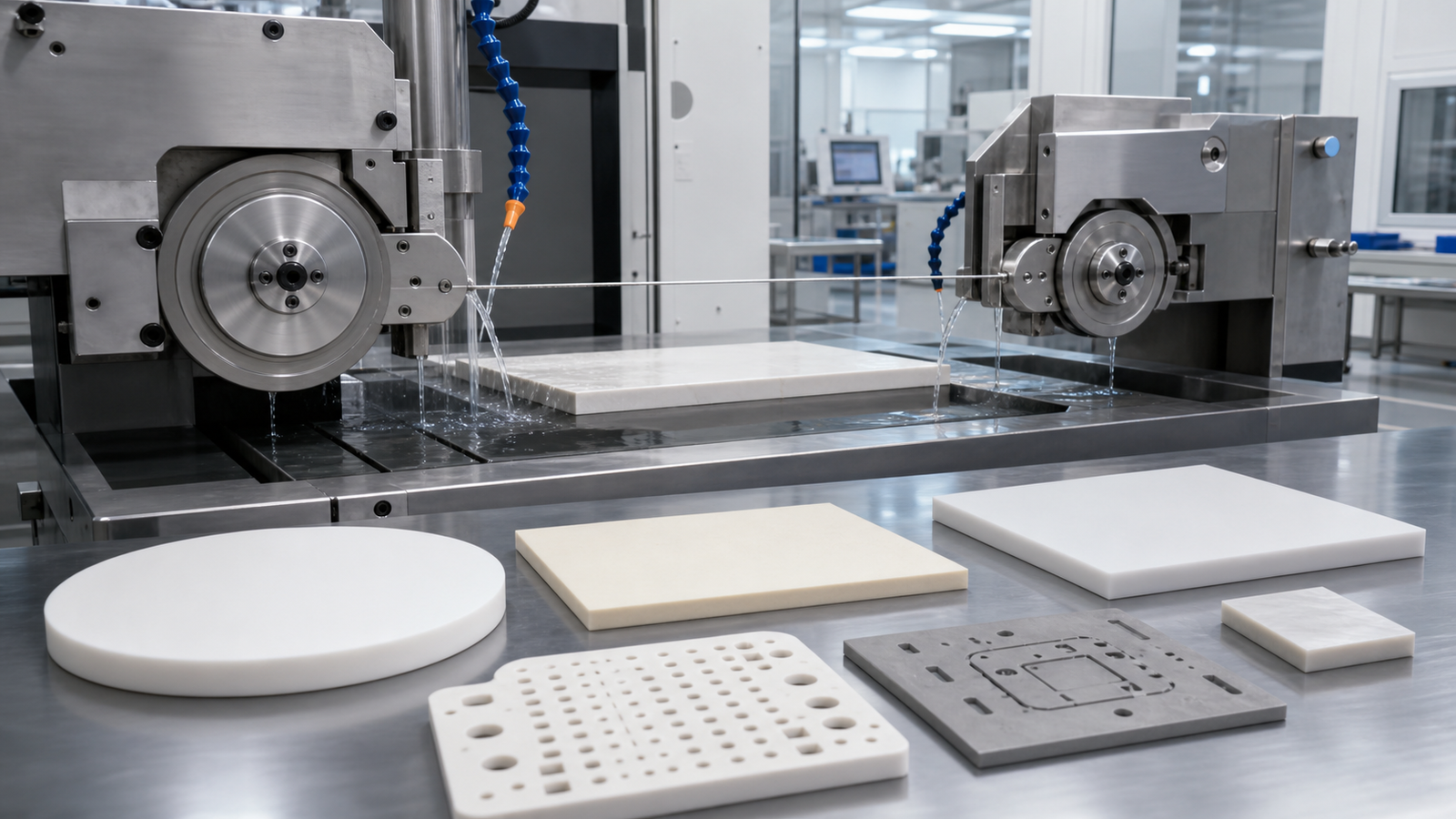
Learn how diamond wire saw technology improves advanced ceramic cutting for semiconductor packaging, power electronics and precision components.
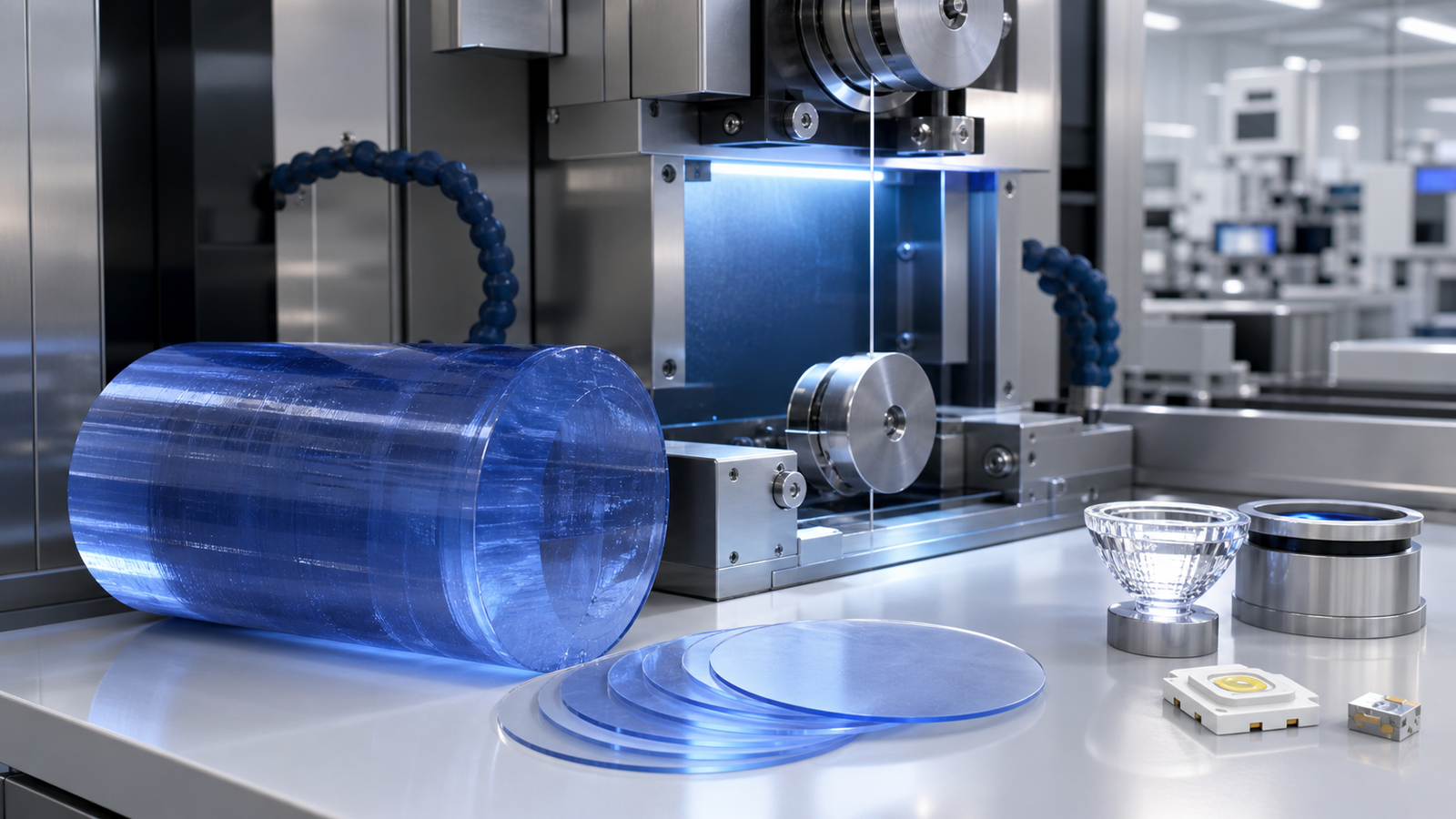
Explore how diamond wire saw technology improves sapphire substrate cutting for LED, RF, optical and semiconductor applications.

ewirexon.com
Typically replies within minutes
Hi, there, is there anything do for you ?
WhatsApp Us
🟢Online | Privacy policy
WhatsApp us