








Sawing Temperature in SiC Wafer Cutting: A Diamond Wire Saw Control Guide
Temperature is easy to treat as a secondary variable in SiC wafer cutting. A machine may report stable wire speed, the coolant tank may remain
Low-Stress Cutting Systems for Hard & Brittle Electronic Materials
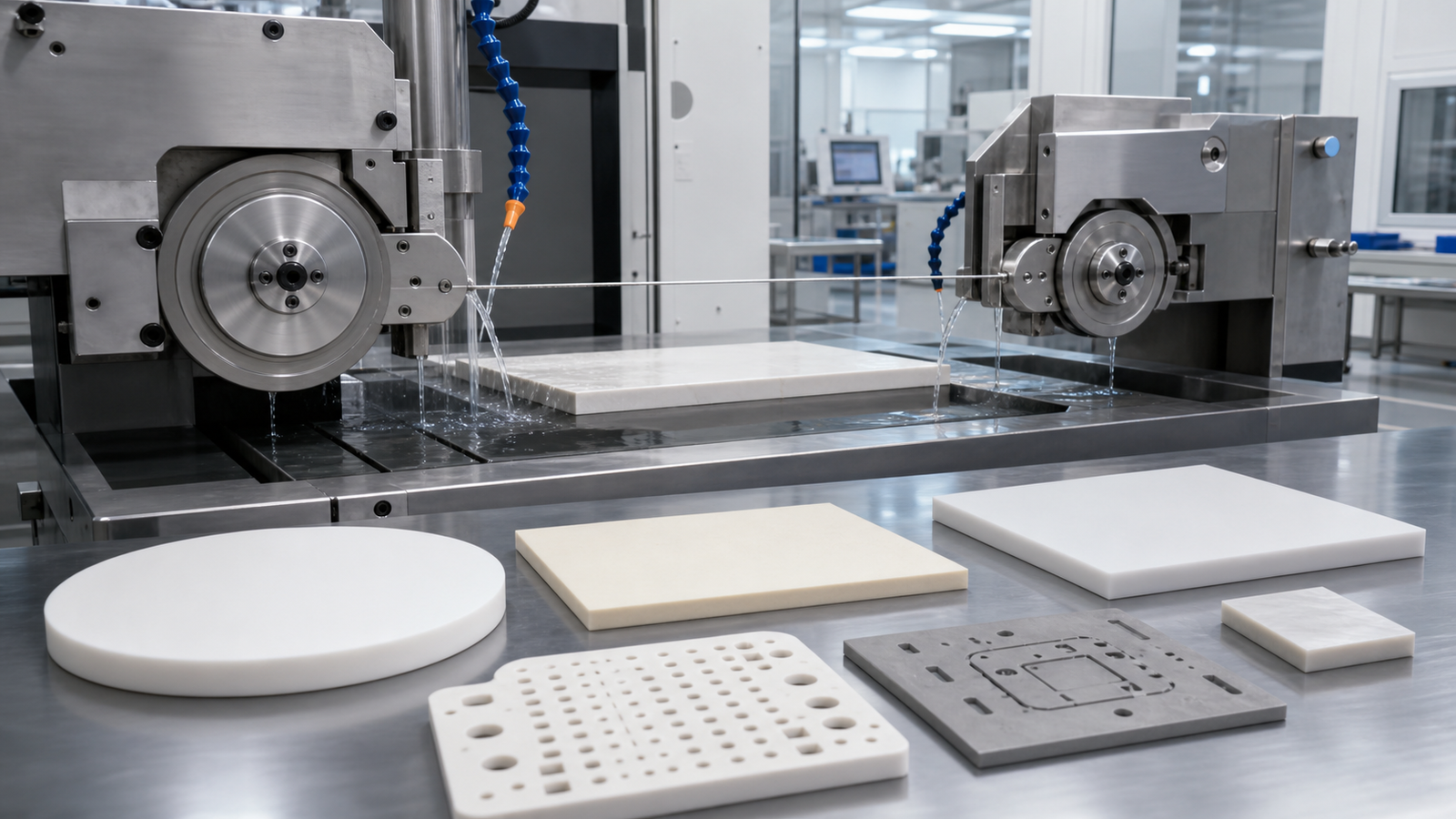
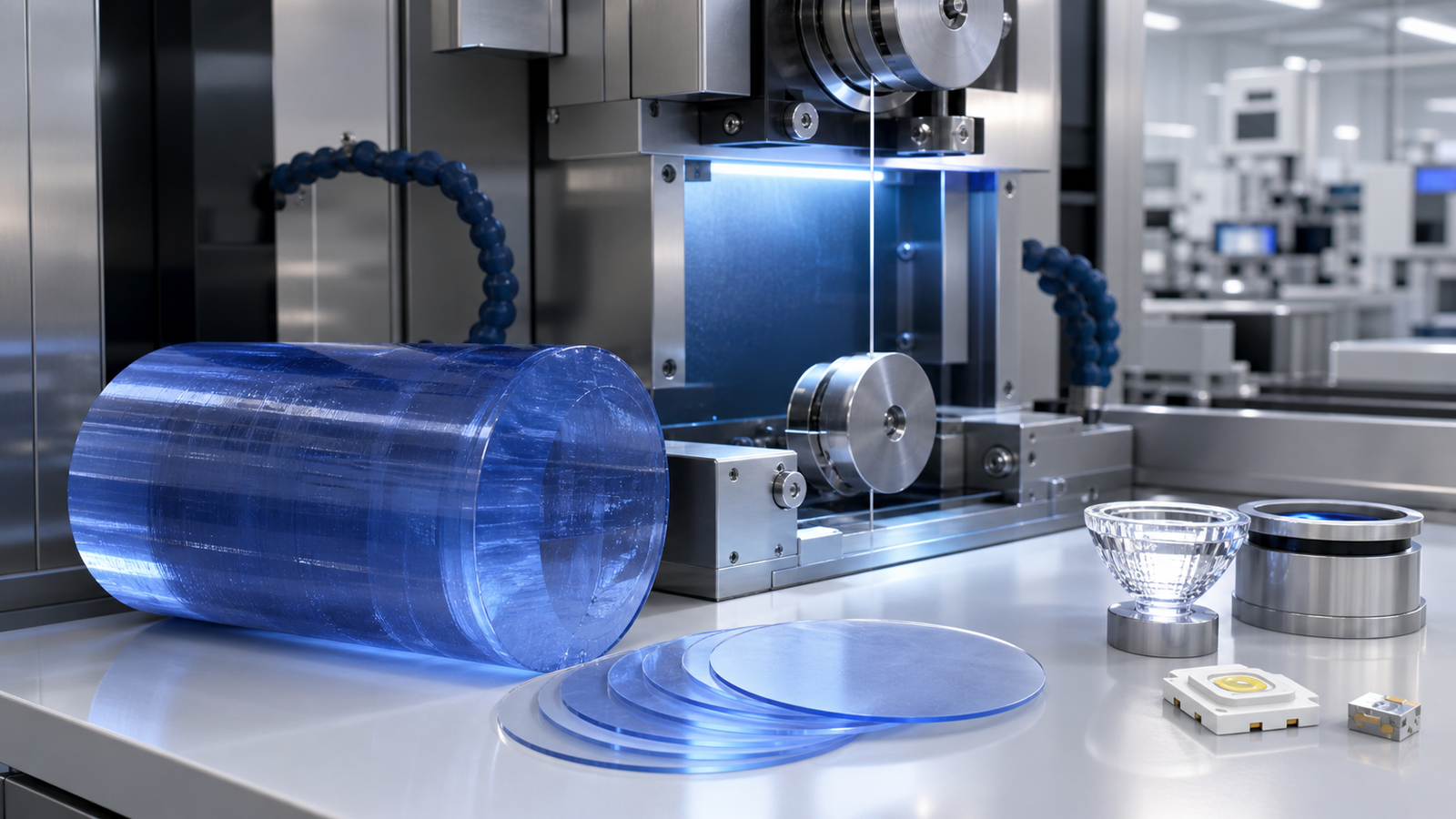
Brittle electronic plates, including ceramic substrates, semiconductor wafers, and glass-ceramic components, present unique machining challenges due to their high hardness and low fracture toughness. Precision machining is required to achieve tight dimensional tolerances while avoiding surface damage and cracking.
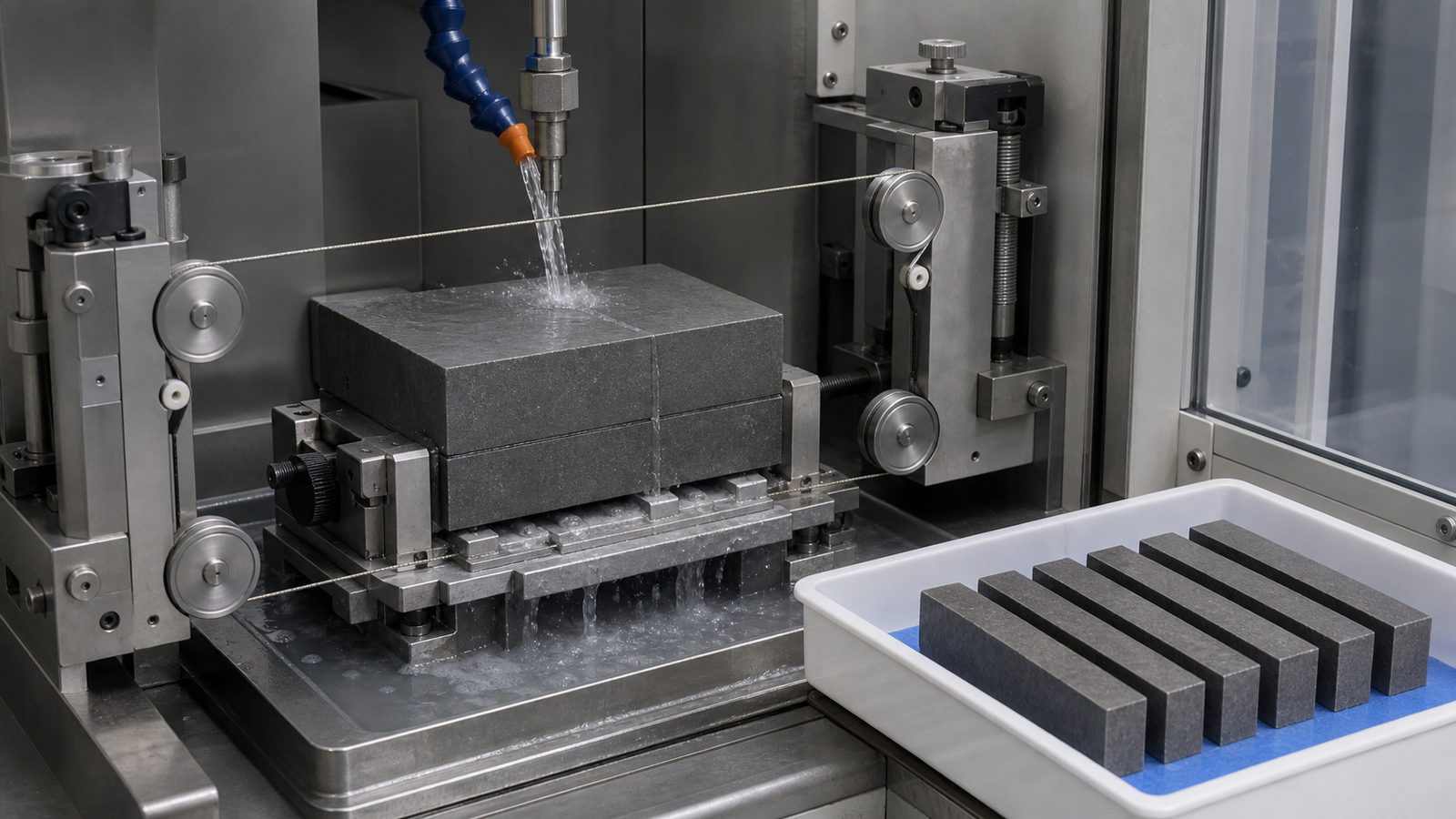
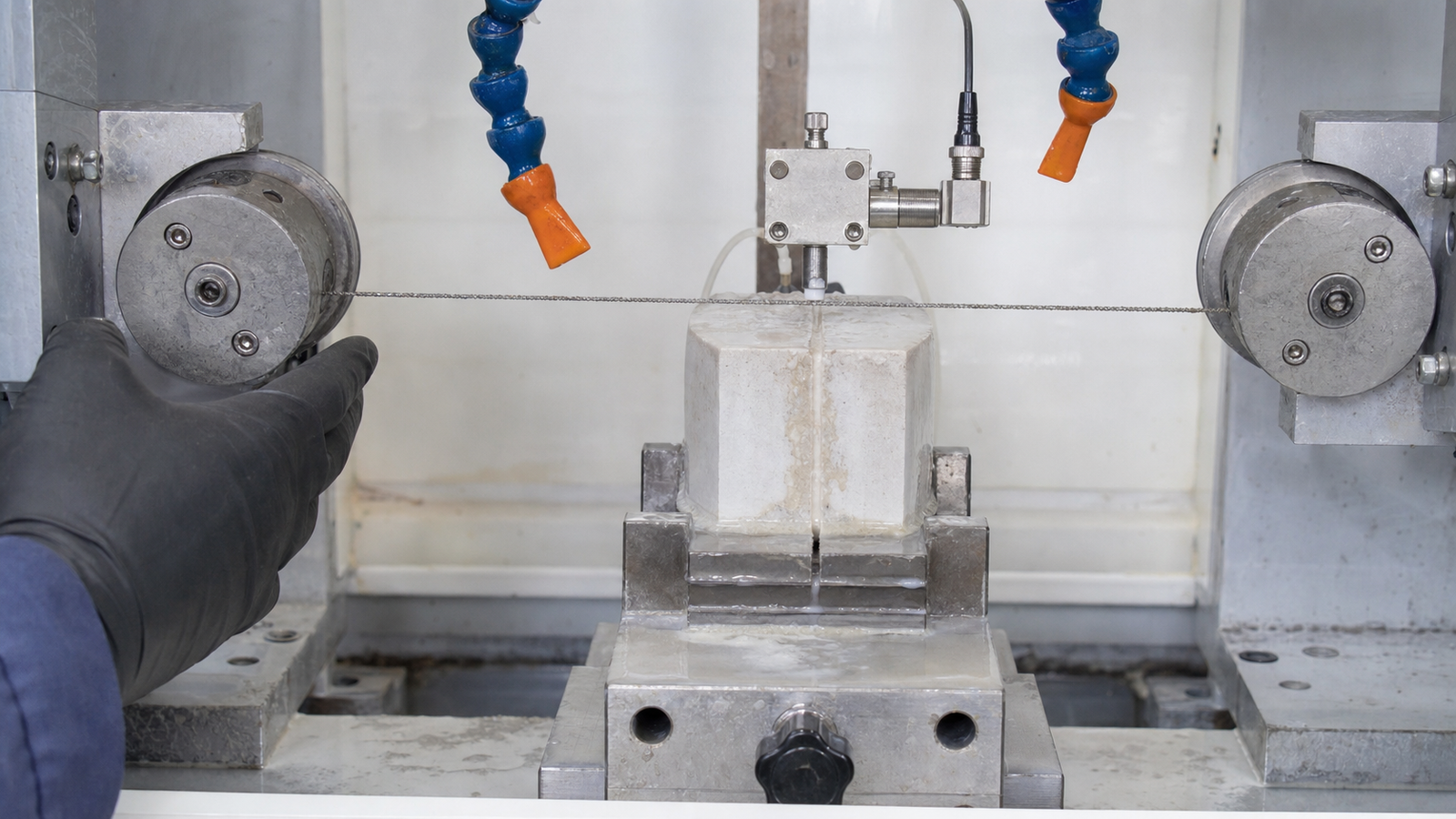
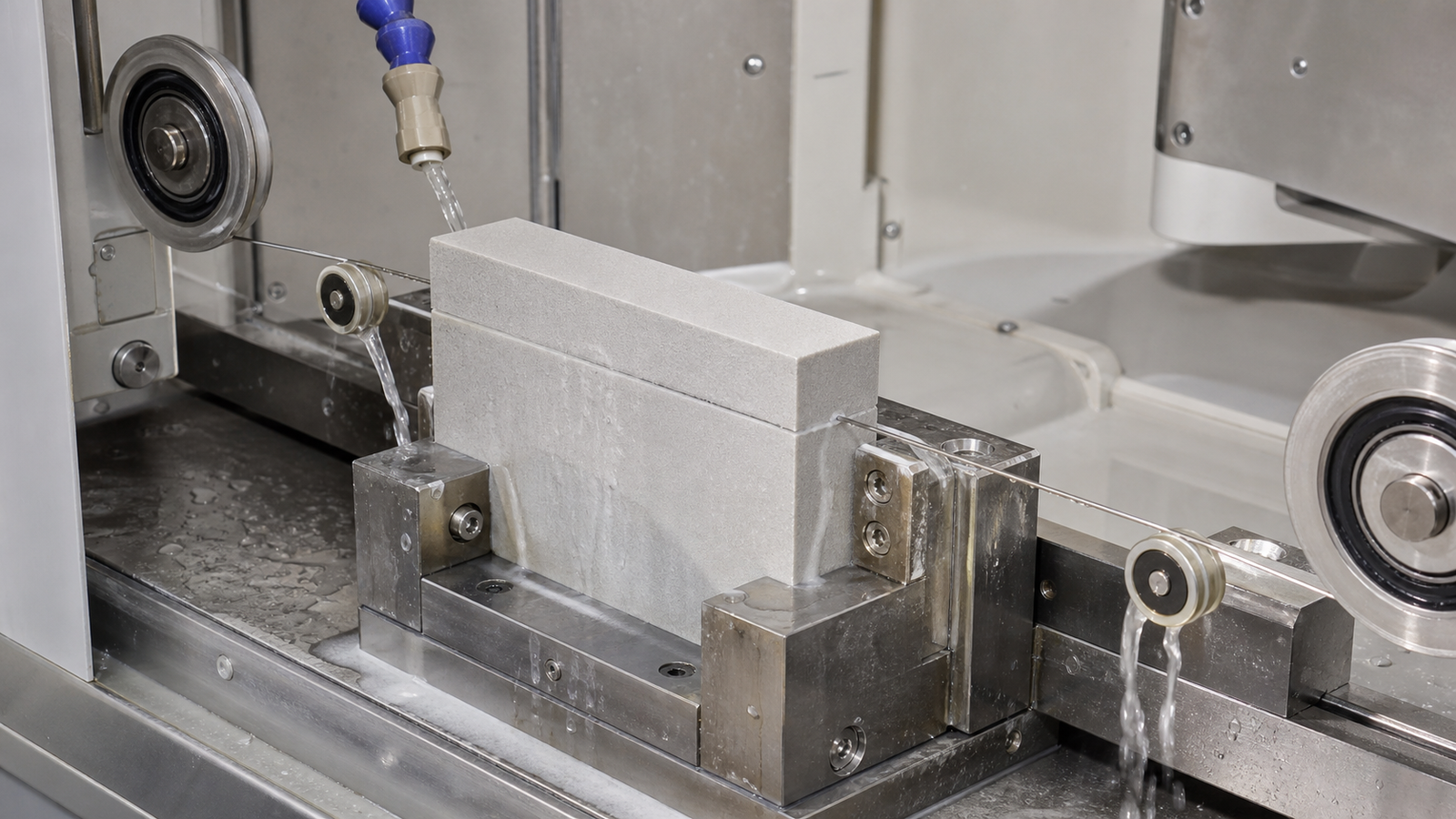
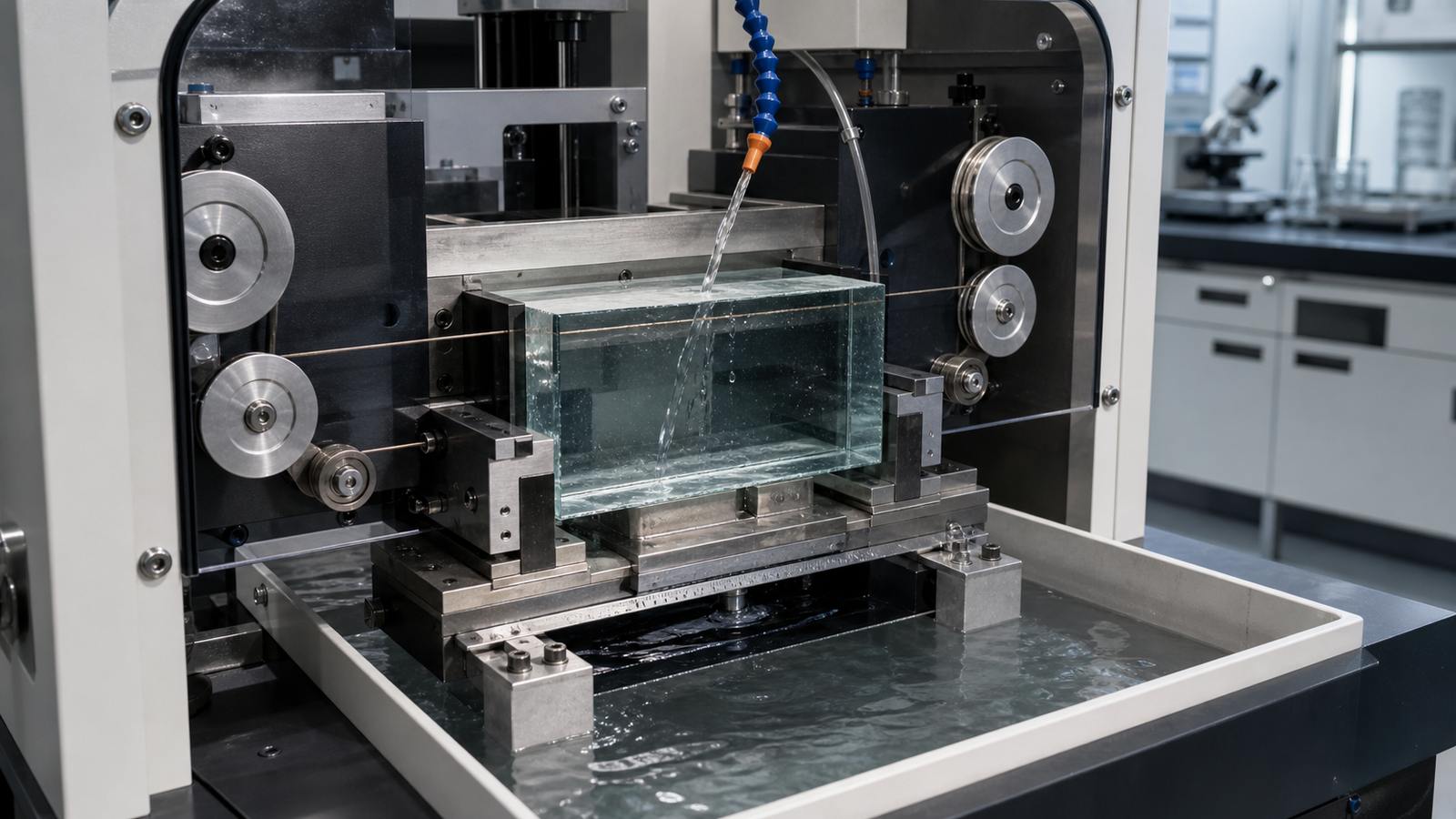
Our diamond wire cutting systems excel at ultra-precise machining of hard brittle materials, achieving micron-level accuracy and minimal surface damage. The advanced cutting technology controls subsurface damage effectively, making it ideal for microelectronic components, power devices, and sensor manufacturing.
Engineered for the most demanding semiconductor and electronics applications, our systems feature high-rigidity frames and intelligent process control. They deliver stable, repeatable performance for R&D prototypes and high-volume production lines alike, meeting the strict quality standards of the 5G, aerospace, and medical electronics industries.
Our diamond wire cutting systems are engineered for the complex processing of hard, brittle electronic plates, including ceramic substrates, semiconductor wafers, and glass-ceramic components. The advanced cutting technology achieves ultra-fine slicing with minimal surface damage, making it ideal for microelectronic components, power devices, and sensor manufacturing. With customizable cutting paths and high-rigidity machine frames, it delivers consistent accuracy for even the most challenging brittle materials.
| NO. | Parameter | Specification |
| 1 | Model | TCQF400LNC-FM-HL |
| 2 | Cutting Principle | Endless diamond wire / Physical cutting |
| 3 | Cutting Functions | Slicing / Angle & Profile Cutting |
| 4 | Maximum Workpiece Size(mm) | Φ600mm, Height 500mm |
| 5 | Worktable Size(mm) | Ø380 转台 |
| 6 | Cutting Planarity Accuracy(mm) | 0.08 |
| 7 | Surface Roughness(μm) | Ra 0.8μm |
| 8 | Wire Specification(mm) | Ø0.65–1.0/2580 |
| 9 | Tension System | Constant Wire Tension Control |
| 10 | Guide Wheel Quantity | 4 wheels |
| 11 | Drive Motor | Servo motor |
| 12 | Wire Speed (m/s) | 51Max(Adjustable) |
| 13 | Total Power(kW) | 2.8 |
| 14 | Voltage | 220v 50Hz |
| 15 | Control System | Custom-developed Tongcheng T32 system |
| 16 | Footprint (L×W×H)(mm) | 1350×1066×1968 |
| 17 | Gross Weight kg | 720 |

Temperature is easy to treat as a secondary variable in SiC wafer cutting. A machine may report stable wire speed, the coolant tank may remain

A diamond wire can continue moving long after it has stopped cutting economically. It may not be broken, alarms may remain clear, and the machine

Build a SiC wafer metrology control plan after diamond wire saw cutting, covering TTV, flatness, bow, warp, edge chips and subsurface damage.

See how 800 VDC AI data center power architectures change SiC wafer cutting, kerf control, surface damage limits and supplier qualification.

Build a practical SiC slicing cost model using kerf loss, yield, wire life, cycle time, finishing allowance and diamond wire saw data.

Learn how 200 mm SiC wafer slicing changes contact length, wire bow, coolant delivery, TTV control and diamond wire saw qualification.
ewirexon.com
Typically replies within minutes
Hi, there, is there anything do for you ?
WhatsApp Us
🟢Online | Privacy policy
WhatsApp us