










Graphite and carbon materials are widely used in semiconductor thermal field components, EDM electrodes, battery and fuel-cell tooling, vacuum furnace parts and high-temperature fixtures. They are machinable compared with ceramics or sapphire, but precision cutting still presents real production challenges. Dust, edge breakout, dimensional drift and material waste can affect both part quality and workshop cleanliness.
For high-value graphite blocks and carbon components, 다이아몬드 와이어 톱 technology offers a practical way to improve cutting control. The goal is not only to cut the material. It is to reduce waste, manage dust, protect geometry and support repeatable processing.
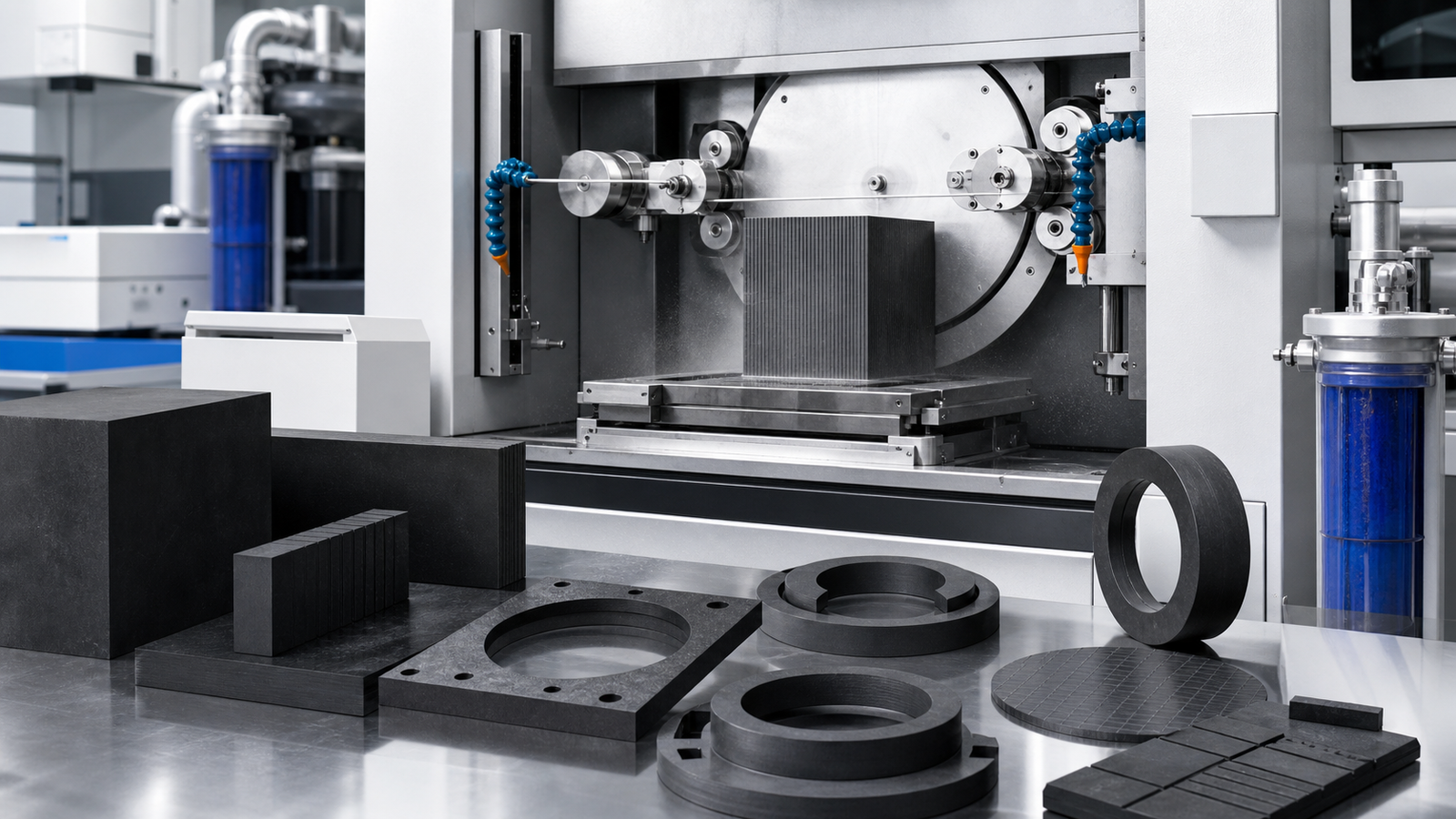
Why Graphite Cutting Is Different from Ceramic Cutting
Graphite is not brittle in the same way as sapphire or advanced ceramics, but it has its own problems. It can produce fine powder, chip at edges, absorb coolant depending on grade and create dimensional variation if poorly supported. Carbon composites may also behave differently depending on fiber direction and bonding structure.
In semiconductor and new energy applications, graphite components often have tight dimensional requirements. Rings, plates, trays, heaters, susceptors and special-shaped parts must fit into larger systems. A rough cut may add extra milling time or create scrap if the part has insufficient machining allowance.
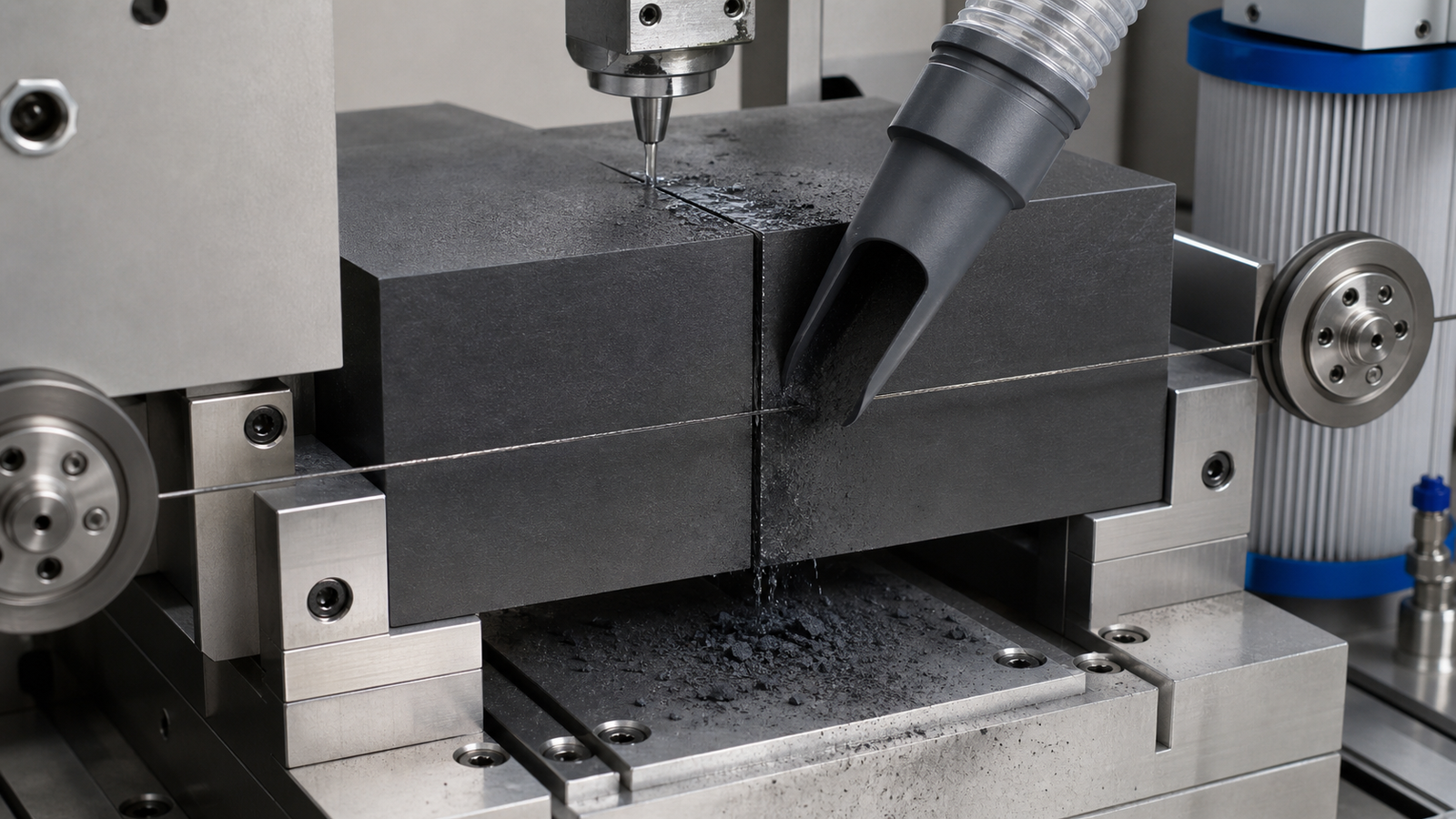
Dust control is a major process concern. Fine graphite powder can contaminate equipment, reduce visibility and increase maintenance. A cutting solution should include extraction, filtration or coolant strategy based on the specific material grade and factory requirements.
Common Problems in Graphite and Carbon Material Cutting
Material waste is one of the first issues. Graphite blocks can be costly, especially high-purity grades used in semiconductor processing. Narrow kerf cutting helps preserve more usable material from each block.
Edge breakout and surface roughness can occur when the workpiece is not supported or when feed conditions are unstable. This is especially relevant for thin plates, rings and special-shaped parts.
Dust and debris accumulation can reduce process stability. If powder stays in the cutting zone, it may increase friction and affect surface finish. Proper extraction or coolant-assisted removal keeps the process more predictable.
How Diamond Wire Saw Technology Helps
A 정밀 다이아몬드 와이어 톱 can cut graphite blocks, plates, rings and carbon components with a narrow kerf and controlled cutting path. Compared with thicker cutting tools, the fine wire removes less material and can reduce secondary machining allowance.
한 무한 다이아몬드 와이어 톱 is useful for special shapes, small batches and components where low cutting force and path flexibility are important. For repeated slicing of plates or blocks, a system can be configured around throughput and fixture repeatability.
For graphite, auxiliary equipment is especially important. Dust extraction, filtration, coolant handling, workholding and inspection tools should be evaluated as part of the cutting solution. Consumables also matter: wire life, abrasive selection and guide roller condition affect cost and consistency.
Application Areas and Equipment Selection
Semiconductor manufacturers use graphite and carbon components in high-temperature and vacuum environments. EDM shops need accurate electrodes. Battery and fuel-cell equipment suppliers may need carbon plates or fixtures. Each application has different priorities: purity, dimensional accuracy, edge quality, surface roughness or production speed.
Before selecting equipment, define material grade, block size, desired geometry, tolerance, dust control requirement and downstream machining plan. For special-shaped parts, provide drawings and fixture constraints. For production cutting, ask about maintenance access, dust management and consumable stability.
Ewirexon鈥檚 graphite and carbon material cutting application and irregular high-hardness workpiece machining page are relevant for teams evaluating graphite rings, plates, blocks and custom shapes.
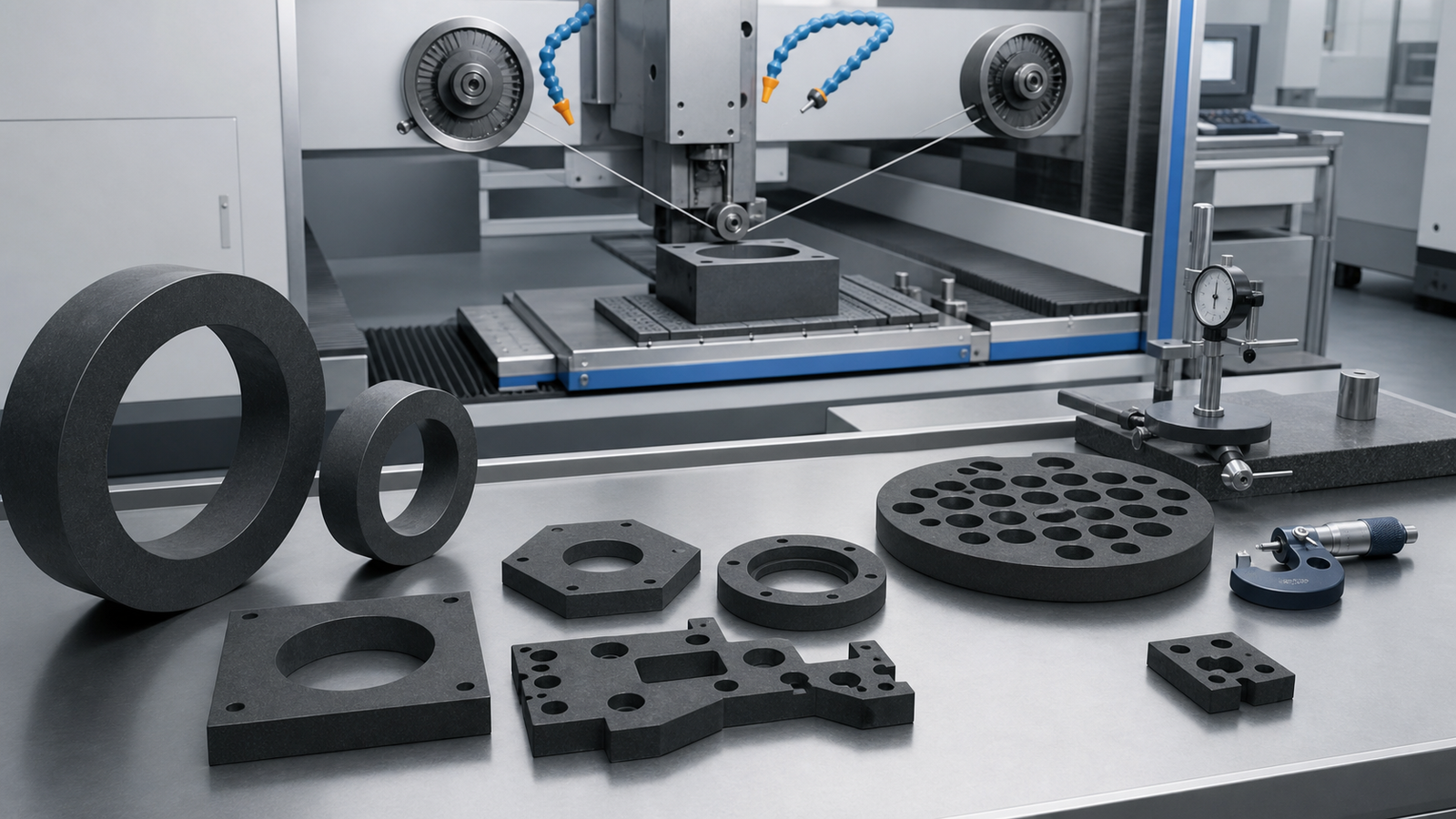
Process Design for Clean Graphite Cutting
Graphite cutting is often treated as simple because the material is easier to machine than ceramics or sapphire. In precision manufacturing, that assumption can be expensive. High-purity graphite blocks, semiconductor thermal field parts and EDM electrodes all require controlled geometry, clean edges and predictable surface quality. A rough cut may save minutes at the saw but add hours in downstream machining.
Dust control should be defined at the start of the project. Dry cutting may require extraction and filtration. Wet or coolant-assisted cutting may reduce airborne dust but can introduce cleaning or absorption concerns depending on graphite grade. The right answer depends on material purity, shop conditions and downstream process needs.
Workholding is another important variable. Rings, thin plates and special-shaped components can vibrate or chip if they are supported poorly. A stable fixture reduces edge breakout and keeps the wire path consistent. For high-value blocks, cutting layout should also be planned to minimize offcut waste.
How Ewirexon Supports Graphite and Carbon Material Applications
Ewirexon鈥檚 graphite and carbon material cutting applications include custom cutting systems, endless diamond wire saw equipment and auxiliary processing support. The goal is to match the process to the part geometry, not only to the raw material block. This is especially useful for rings, plates, complex profiles and components that require limited machining allowance after cutting.
For small batches or complex shapes, an endless diamond wire saw can provide flexible profile cutting with lower material waste. For repeated block slicing, a more production-oriented configuration may be appropriate. Consumables, dust extraction, filtration, fixtures and inspection tools should be reviewed together because they define the real operating cost.
Before requesting a graphite cutting system, prepare material grade, purity requirement, dimensions, drawings, tolerance, dust control preference and expected production volume. If the component will be used in semiconductor or high-temperature equipment, include cleanliness and downstream machining requirements as well.
Total Cost and Workshop Control
Graphite cutting cost should include more than cutting speed. Dust cleanup, filter replacement, machine maintenance, rejected parts, extra milling allowance and operator handling time all influence the real cost per component. A stable diamond wire saw process can reduce these hidden costs by creating a cleaner, narrower and more predictable cut.
For semiconductor-grade graphite, purity and cleanliness may be as important as geometry. Cutting equipment should be reviewed for contamination risk, dust containment and cleaning access. For EDM electrodes or new energy tooling, dimensional repeatability and material utilization may be the stronger priorities.
Procurement teams should ask whether the supplier can review drawings and propose fixture concepts. Graphite rings, plates and complex profiles often need support points that differ from simple rectangular block cutting. Good fixture planning improves edge quality and reduces the chance of part movement during cutting.
절단 시험을 위한 구매 전 점검 목록
절단 시스템을 승인하기 전에, 단순히 카탈로그 사양에만 의존하지 말고 체계적인 시험을 실시하십시오. 대표적인 재료 시료를 준비하고, 목표 두께와 절단면 요구 사항을 정의하며, 결과 검사 방법에 대해 합의하십시오. 시험 시에는 절단 폭, 절단 시간, 와이어 상태, 절단면 품질, 표면 상태 및 잠재적 손상의 징후 등을 기록해야 합니다.
공급업체에 초기 설정 파라미터와 그 선정 이유를 설명해 달라고 요청하십시오. 이를 통해 엔지니어링 팀은 해당 공정이 재료의 거동에 기반한 것인지, 아니면 단순히 기계의 기본 레시피에 따른 것인지 파악할 수 있습니다. 첫 번째 결과가 이상적이지 않다면, 공급업체는 다음에 어떤 파라미터를 변경해야 하는지, 그리고 어떤 상충 관계가 예상되는지 설명할 수 있어야 합니다.
해외 공장의 경우, 설치, 예비 부품, 교육 및 원격 문제 해결에 대해서도 검토해야 합니다. 정밀 절단 장비는 시운전 후 작업자가 공정을 안정적으로 유지할 수 있을 때 비로소 가치를 창출합니다. 따라서 올바른 구매 결정은 기계 성능, 소모품 관리 전략 및 장기적인 공정 지원을 종합적으로 고려해야 합니다.
엔지니어링 참고 사항
실제 생산 현장에서 최상의 절단 결과는 대개 단일한 과격한 공정 매개변수만으로는 달성되지 않습니다. 이는 안정적인 와이어 이동, 제어된 이송 속도, 적절한 고정 장치 지지, 깨끗한 절삭 부스러기 제거, 그리고 검사 피드백이 조화를 이룬 균형 잡힌 공정에서 비롯됩니다. 이러한 변수들을 하나의 시스템으로 간주하는 것이 수율을 확보하고 총 가공 비용을 절감하는 가장 신뢰할 수 있는 방법입니다.
This is why engineering teams should review cutting data, finished-part inspection and consumable behavior together before locking the final equipment configuration.
For graphite projects, dust extraction layout and fixture contact points should be reviewed before cutting trials, because both directly affect cleanliness, edge quality and dimensional repeatability.
자주 묻는 질문
Can diamond wire saw cut graphite?
Yes. Diamond wire saw systems can cut graphite blocks, plates, rings and special-shaped carbon material components with narrow kerf and controlled cutting force.
Why is dust control important in graphite cutting?
Fine graphite powder can contaminate equipment and affect process stability. Extraction, filtration or coolant-assisted removal should be considered during equipment selection.
Does diamond wire cutting reduce graphite material waste?
It can reduce waste by using a narrow cutting path. The benefit is strongest when the wire path is stable and the fixture prevents vibration or edge breakout.
Is endless diamond wire saw suitable for graphite special shapes?
Yes. Endless diamond wire saw systems are useful for special shapes, low-volume precision parts and applications that require flexible cutting paths.
What should I provide for a graphite cutting proposal?
Provide material grade, block or part dimensions, drawing, tolerance, surface requirement, dust control preference, production volume and downstream machining process.