










Advanced ceramics are moving deeper into semiconductor packaging, power electronics, medical devices, aerospace systems and precision industrial components. Materials such as alumina, aluminum nitride, zirconia and silicon nitride are selected because they offer high hardness, electrical insulation, thermal stability and corrosion resistance. Those same properties also make them difficult to cut.
For manufacturers, the cutting step is not a simple preparation process. It determines edge quality, dimensional accuracy, material yield and how much finishing work is required later. When ceramic plates or substrates chip during cutting, the loss is often more expensive than the cutting time itself. This is why many factories evaluate diamond wire saw technology for advanced ceramic cutting.
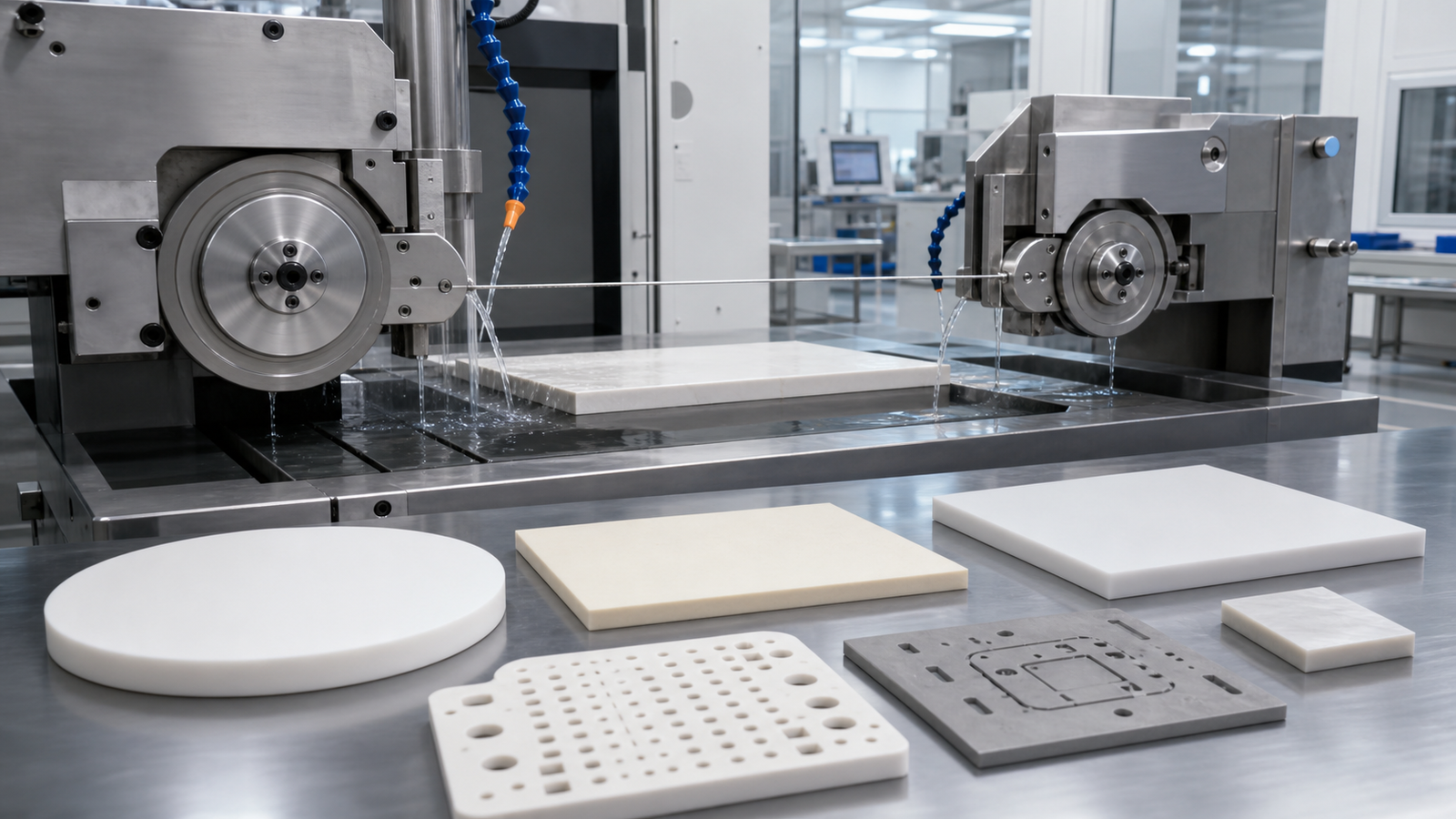
Why Advanced Ceramics Are Difficult to Cut
Advanced ceramics are hard, brittle and often expensive to sinter or machine. Unlike metals, they do not absorb cutting stress through plastic deformation. When the local cutting force becomes too high, the material releases stress through cracks, edge chipping or sudden breakage.
Thermal behavior also matters. Some ceramics are used because they conduct heat well, such as aluminum nitride. Others are selected for insulation or wear resistance. During cutting, heat, vibration and debris accumulation can change the surface condition and increase microcrack risk. For semiconductor packaging substrates, even small edge defects can reduce assembly yield or create reliability concerns.
This makes hard brittle material cutting a process-control problem. The equipment must remove material efficiently while keeping cutting force predictable. Machine rigidity, wire tension, feed speed, coolant delivery and fixture support all become part of the quality result.
Common Problems in Ceramic Substrate Cutting
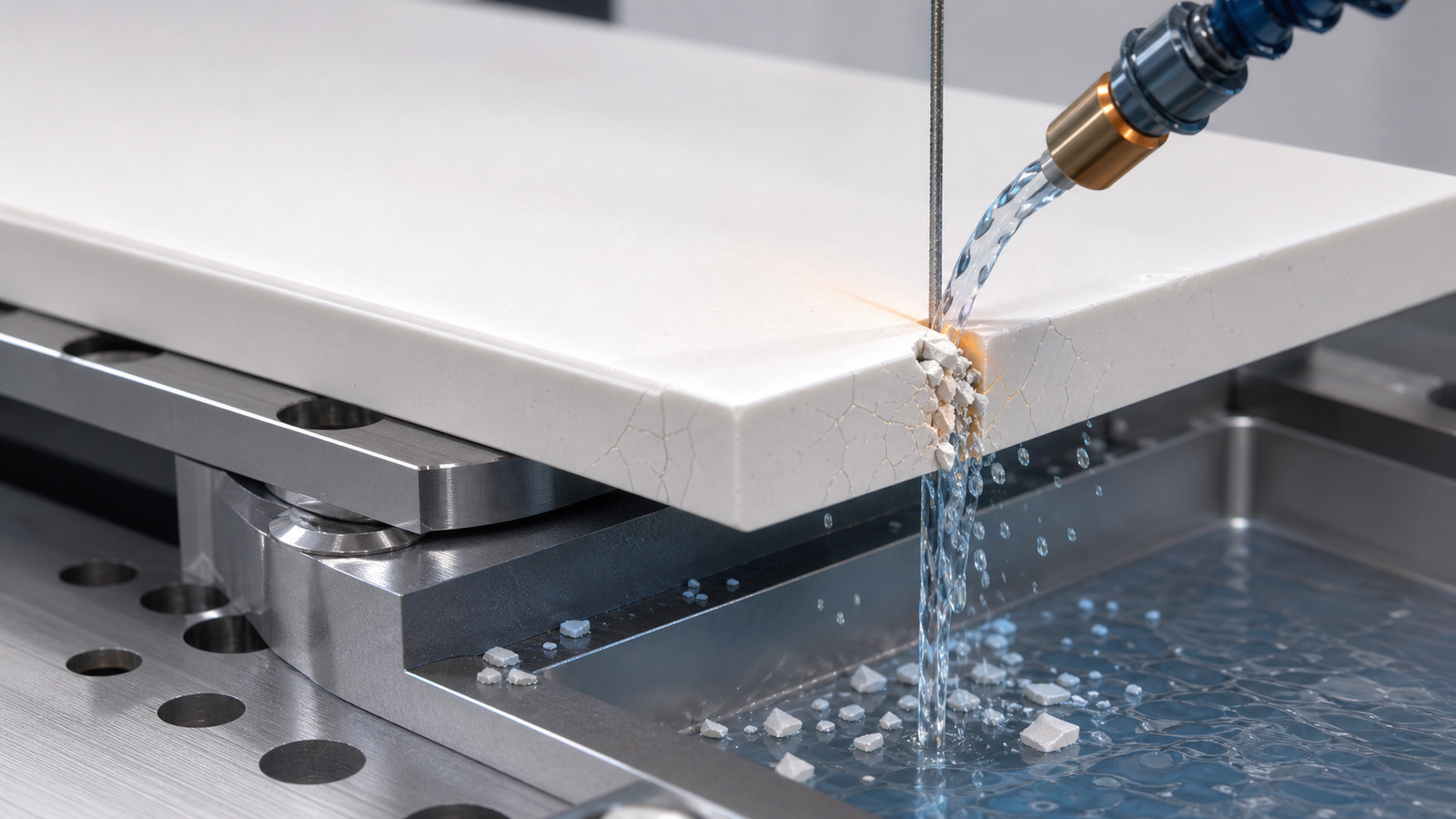
Edge chipping is the most visible problem. It often appears when the workpiece is poorly supported, when feed force is too high, or when vibration causes unstable contact between the wire and the ceramic. Chipping reduces usable area and may require extra grinding.
Subsurface damage is more difficult to detect. A ceramic part can look acceptable after cutting but still contain microcracks under the surface. These cracks may grow during later polishing, metallization, brazing or thermal cycling. For high-reliability electronics, hidden damage is a serious risk.
Kerf loss also matters. Ceramic blanks and substrates may be costly, especially in custom sizes. A narrower and more stable cut helps improve material utilization. However, using a thin wire without stable tension can create wire bow and inconsistent cut geometry.
How Diamond Wire Saw Technology Helps
A precision diamond wire saw uses diamond abrasive on a fine wire to remove ceramic material through controlled abrasion. Compared with blade cutting, the wire can create a narrow cutting path with lower contact stress. This helps reduce kerf loss and lowers the risk of edge damage when the process is optimized.
Stable wire motion is essential. An endless diamond wire saw can be useful for ceramic R&D, special shapes and low-volume production because the continuous wire loop supports smooth cutting behavior. For factories cutting many flat substrates, a diamond multi-wire saw may be considered when throughput and thickness consistency are priorities.
Coolant and debris removal should not be treated as secondary details. Ceramic debris can stay in the cut and scratch the surface or raise cutting resistance. A stable coolant stream helps remove particles and control heat. Fixture design is equally important, especially for thin plates that can vibrate or flex during cutting.
Equipment Selection Advice for Engineers and Buyers
Before selecting equipment, define the ceramic type, sintering density, part size, target thickness, edge quality requirement and acceptable kerf width. If the part will be used in semiconductor packaging, include downstream requirements such as metallization, bonding or laser marking. These details affect the ideal process window.
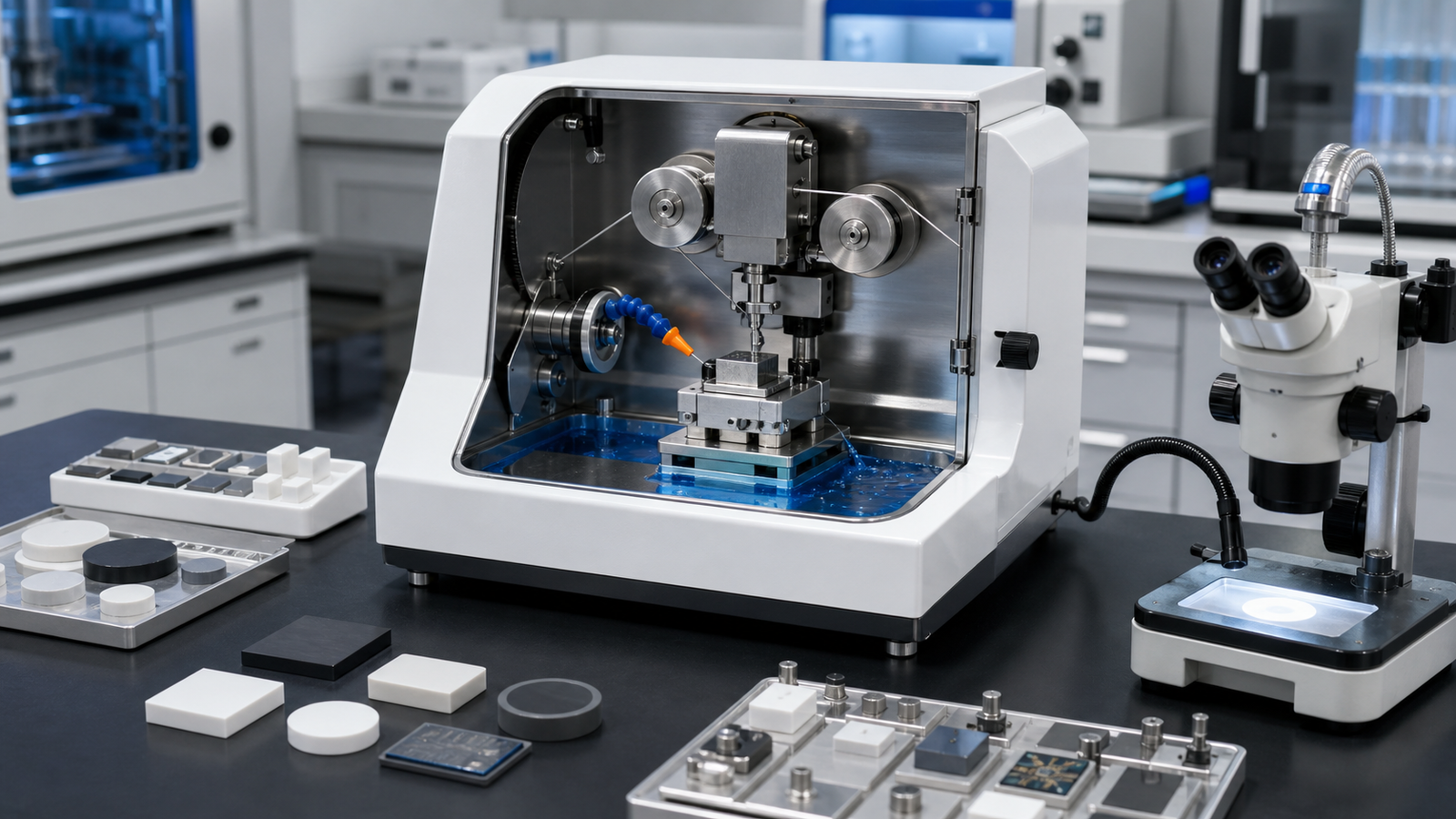
R&D teams and labs may benefit from a desktop endless loop diamond wire saw because it allows cutting trials on small samples, failed parts or new material batches. Production teams should evaluate repeatability, wire life, fixture changeover, coolant filtration and operator training.
For non-standard ceramic plates or complex shapes, customized equipment may be more practical than forcing a standard saw to fit the process. Ewirexon鈥檚 diamond wire saw for ceramic cutting and process parameter consulting pages are useful internal references for this type of application thinking.
Practical Process Window for Ceramic Cutting
A reliable ceramic cutting process should be built around a defined process window rather than a single cutting speed. Engineers should record wire speed, feed rate, wire diameter, coolant condition, cutting force behavior, edge quality and surface condition for every trial. If one parameter changes, the result should be checked again instead of assuming the previous quality level remains valid.
For example, a thicker alumina plate may tolerate a different feed rate than a thin aluminum nitride substrate. Zirconia may respond differently from silicon nitride because fracture toughness, density and thermal behavior are not the same. Even within the same ceramic family, supplier grade and sintering quality can affect wire wear and edge chipping.
Procurement teams should ask whether the supplier can support this parameter mapping. A diamond wire cutting machine should arrive with a realistic route to stable production, not just a mechanical specification sheet. Useful support includes sample cutting, fixture advice, coolant recommendations, wire selection and operator training.
How Ewirexon Supports Ceramic Cutting Projects
Ewirexon鈥檚 ceramic cutting work sits inside a broader hard brittle material cutting portfolio, including SiC, sapphire, quartz glass, electronic substrates and special crystals. This matters because many ceramic cutting problems are shared with other brittle materials: edge chipping, kerf loss, wire bow, debris control and hidden subsurface damage.
For early-stage projects, a desktop or compact endless diamond wire saw can help validate whether the material can be cut cleanly. For production-oriented ceramic substrates, machine rigidity, fixture repeatability and consumable life become more important. For unusual geometries, customized equipment development may be needed so the machine supports the part instead of forcing the part into a standard work envelope.
The best starting point is a material brief: ceramic type, part drawing, target tolerance, cutting direction, current defect photos and output requirement. With that information, it becomes much easier to choose between an endless diamond wire saw, a diamond multi-wire saw or a customized diamond wire cutting solution.
Cost Factors Beyond the Machine Price
For ceramic manufacturers, the lowest machine price is rarely the lowest production cost. The more useful comparison is cost per acceptable part. This includes kerf loss, rejected substrates, wire consumption, fixture wear, coolant management, inspection time and extra grinding or polishing after cutting.
A slower but stable cutting recipe may be more economical than a faster recipe that creates edge chips. Likewise, a better fixture can pay for itself if it prevents breakage on expensive ceramic plates. When comparing suppliers, ask for sample-cut data, expected wire life, recommended inspection method and support for process tuning after installation.
Buyers should also consider whether the equipment can support future materials. Many factories that start with alumina later add aluminum nitride, zirconia, silicon nitride or electronic ceramic substrates. A flexible diamond wire saw platform gives the process team more room to adapt as product requirements change.
Pre-Purchase Checklist for Cutting Trials
Before approving a cutting system, run a structured trial instead of relying only on catalog specifications. Prepare representative material samples, define the target thickness and edge requirement, and agree on how results will be inspected. The trial should record kerf width, cutting time, wire condition, edge quality, surface condition and any signs of hidden damage.
Ask the supplier to explain the starting parameters and why they were selected. This helps your engineering team understand whether the process is based on material behavior or simply on a default machine recipe. If the first result is not ideal, the supplier should be able to explain which parameter should change next and what tradeoff to expect.
For overseas factories, also review installation, spare parts, training and remote troubleshooting. Precision cutting equipment creates value only when operators can keep the process stable after commissioning. A good purchase decision therefore combines machine capability, consumable strategy and long-term process support.
FAQ
What is the best method for advanced ceramic cutting?
For many precision ceramic applications, diamond wire saw cutting is preferred because it can reduce cutting stress, kerf loss and edge chipping compared with more aggressive cutting methods.
Can a diamond wire saw cut aluminum nitride and zirconia?
Yes. Diamond wire saw systems can cut aluminum nitride, zirconia, alumina, silicon nitride and other advanced ceramics when wire type, feed rate, coolant and fixture support are matched to the material.
Why do ceramic substrates chip during cutting?
Chipping usually comes from high local stress, vibration, poor support, worn wire or insufficient debris removal. Process stability is more important than simply slowing down the cut.
When should I use a desktop endless loop diamond wire saw?
Use it for R&D, sample preparation, small-batch cutting and process validation when flexibility and low-stress cutting matter more than high-volume output.
What information should I send before requesting a ceramic cutting solution?
Send material type, dimensions, thickness target, tolerance, edge quality requirement, volume target and any current problems such as chipping, cracks or excessive kerf loss.